How art invented humanity

When early humans first painted cave walls, they began to find out who they really were: our minds emerged from our images
In 1940, rumours of secret passageways to an old manor lured four teenage boys into a hole in the ground near the village of Montignac in southwestern France. Instead of a tunnel laden with gold, they found a series of natural chambers bejewelled with exquisite paintings: horses and elk, ibex and bulls, almost perfectly preserved on the limestone walls. Experts examining the Lascaux caves in subsequent years using radiocarbon dating estimated that the paintings had been made some 19,000 years ago. Today, the images are believed to be around 20,000 years old. But Lascaux is far from the oldest example of human art. Since 1940, many other caves have been found in Europe, Australia, Indonesia and Africa containing art no less astounding. Some of it is more than twice the age of the Lascaux murals.
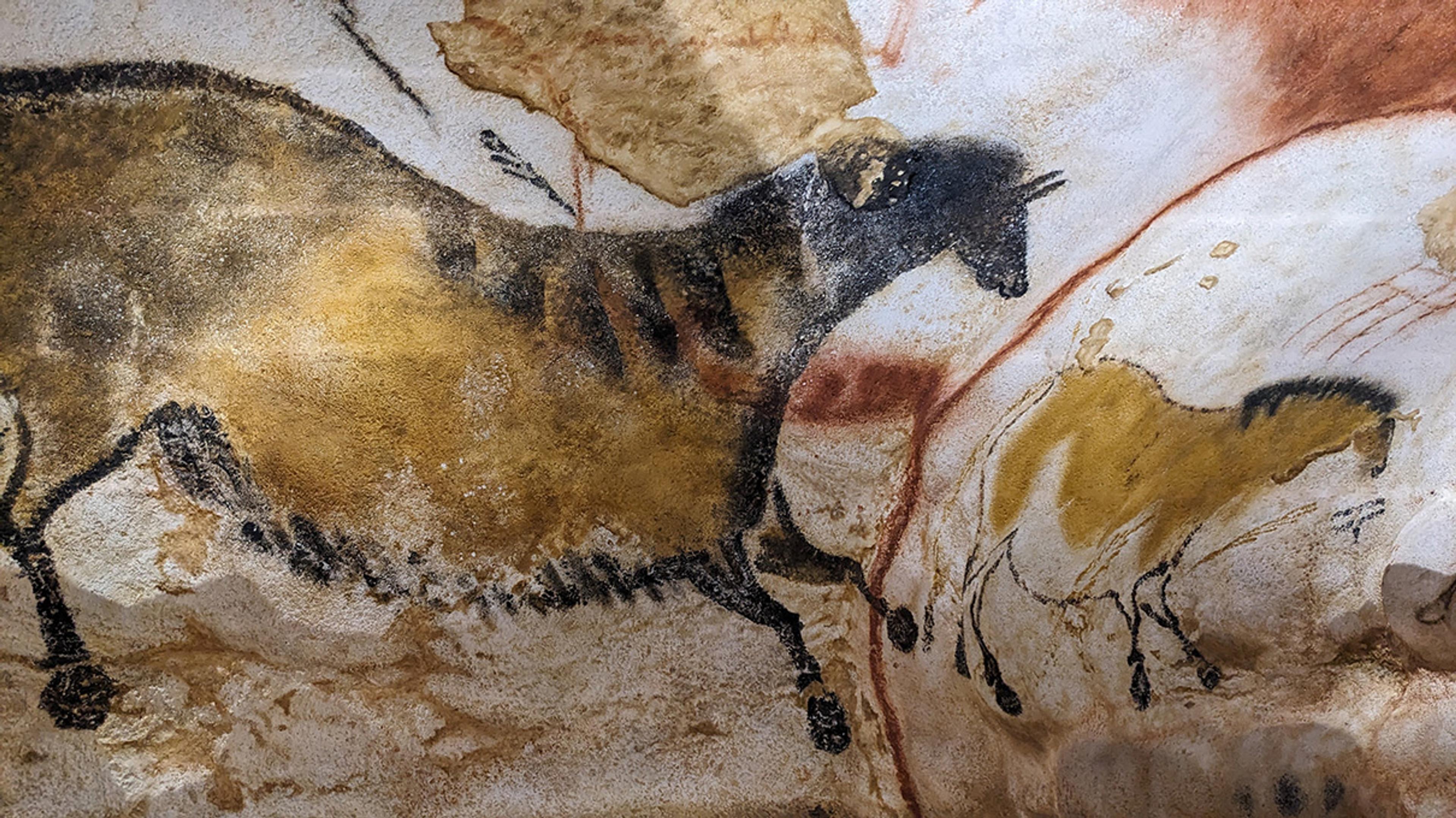
Cave paintings at Lascaux, France. Courtesy Wikimedia
These discoveries have turned the questions of when and why humans invented art into central problems of the human sciences. As fair and poignant as such questions may be, they leave unaddressed the deeper mystery of what art is in the first place, where it comes from in the human soul, and what it might reveal to us about the nature of reality.
Popular legend holds that when Pablo Picasso visited the Lascaux cave a few years after its discovery, he emerged exclaiming: ‘We have invented nothing’ – art had appeared full-grown from its earliest instance. The common interpretation is that Picasso was humbly attributing the invention of art to our prehistoric ancestors rather than claiming it for himself and his contemporaries, or any human of the modern age. But perhaps this apocryphal story conveys a weirder truth, namely that no one really invented art. Instead, it was the other way around: art invented humanity.
In 1819, John Keats completed ‘Ode on a Grecian Urn’, a poem that engages with ancient art in a totally different spirit from that of most modern archaeologists. Keats converses with the eponymous urn as though it were a living being rather than an object bequeathed to us by the dead, and this living being speaks in the language of beauty. Two centuries later, his conversation with the urn still leaves us with unresolved puzzles about the place of art in the world, most memorably with the closing words:
When old age shall this generation waste,
Thou shalt remain, in midst of other woe
Than ours, a friend to man, to whom thou say’st,
‘Beauty is truth, truth beauty, – that is all
Ye know on earth, and all ye need to know.’
To modern minds, the idea that truth and beauty are somehow synonymous, that they might coincide at all, is likely to seem absurd. What do beauty and truth have to do with one another? If anything, isn’t beauty closer to untruth, given how frequently it deceives us?
A philosopher would answer that it depends on how we define our terms. The German filmmaker Werner Herzog, for instance, once defended his practice of staging or manipulating scenes in his documentaries by distinguishing two kinds of truth. The first is the purely factual kind that obtains when a statement corresponds to a state of affairs, as when you say ‘the crows are flying over the field’ because the crows happen to be doing just that. Herzog no doubt acknowledges the practical value of this kind of truth, but he holds it in low enough regard to call it ‘the truth of accountants’. The second kind is what he calls ‘ecstatic truth’. It is more interesting to him because it denotes what artists, poets and philosophers are (or should be) seeking. Ecstatic truth isn’t a label you slap onto accurate statements but an unrepeatable event that comes with the full force of revelation. It is new each time it occurs. There is something weird in it, something that evokes the mystery of existence.
Ecstatic truth takes us out of ourselves; it hints at an excess of meaning
Herzog’s two kinds of truth aren’t exactly opposed. Each depends on the other. In a parallel universe where facts are impossible to articulate – a universe too chaotic or unstable to allow for coherent statements – ecstatic truth would likewise be impossible to express. However, without ecstatic truth, no statement of fact would be worth making. Let me explain.
One of Vincent van Gogh’s last paintings, Wheatfield with Crows (1890), appears to depict – as the title suggests – nothing more fantastical than crows flying over a field at dusk. But there is such movement, such turbulence to the image that we resist the spoilsports who would turn up their noses, saying: ‘It’s just a bunch of crows flying over a field – big deal.’ If the painting can be said to be ‘making a statement’ at all, it is a statement pertaining to truth of a different order, and ‘ecstatic’ is one way to describe it.
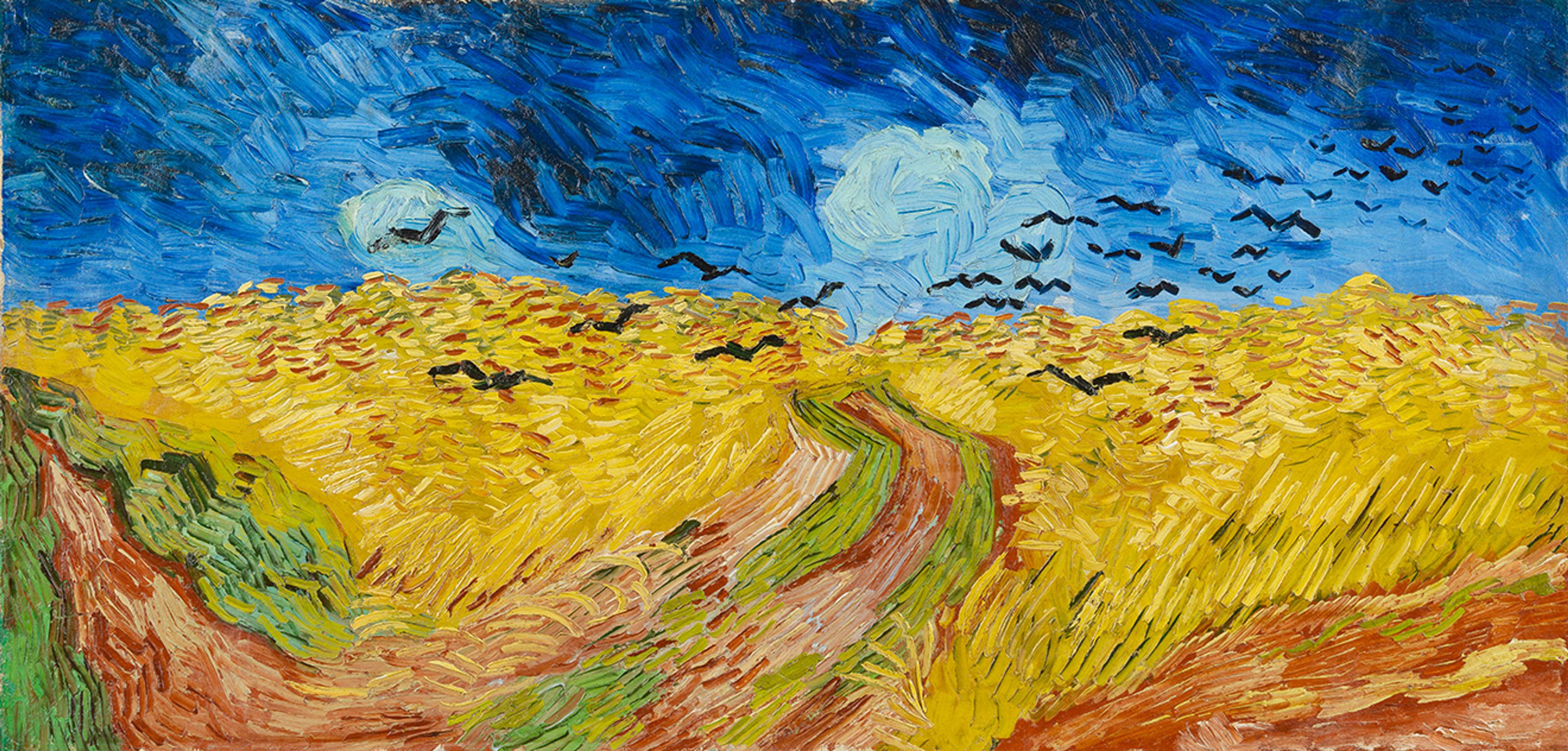
Wheatfield with Crows (1890) by Vincent van Gogh. Courtesy Wikimedia
The word comes from the Greek ekstasis, ‘to stand outside oneself’. Ecstatic truth takes us out of ourselves; it hints at an excess of meaning, over and above what we might otherwise reduce to plain statements of fact. The image, ultimately, is a singular event that transcends any particular interpretation. It depends on there being an intelligible world in which crows are crows and fields are fields, but it also resists any reduction to those facts. Nothing, the picture says, is ‘just’ anything.
Today, many would argue that the ordinary ‘truth of accountants’ is more fundamental than ecstatic truth, which relies heavily on perception, interpretation and subjective feeling. Yet this misses the reality that art discloses.
The mystery isn’t what the crows and the field mean, but that they mean
Think about empirical science. In order to have it, we must believe that the Universe is intelligible in principle. Somehow, we humans have the cognitive equipment to think about the world as it is. We must be able to trust our senses enough to believe that the conceptual and mathematical ideas we derive from sensory experience can tell us something about what the world is like beyond sensory experience. The basic realism of science, then, rests upon the following claim: the Universe is such that facts can be plainly stated within it, even though the facts themselves need not be plain.
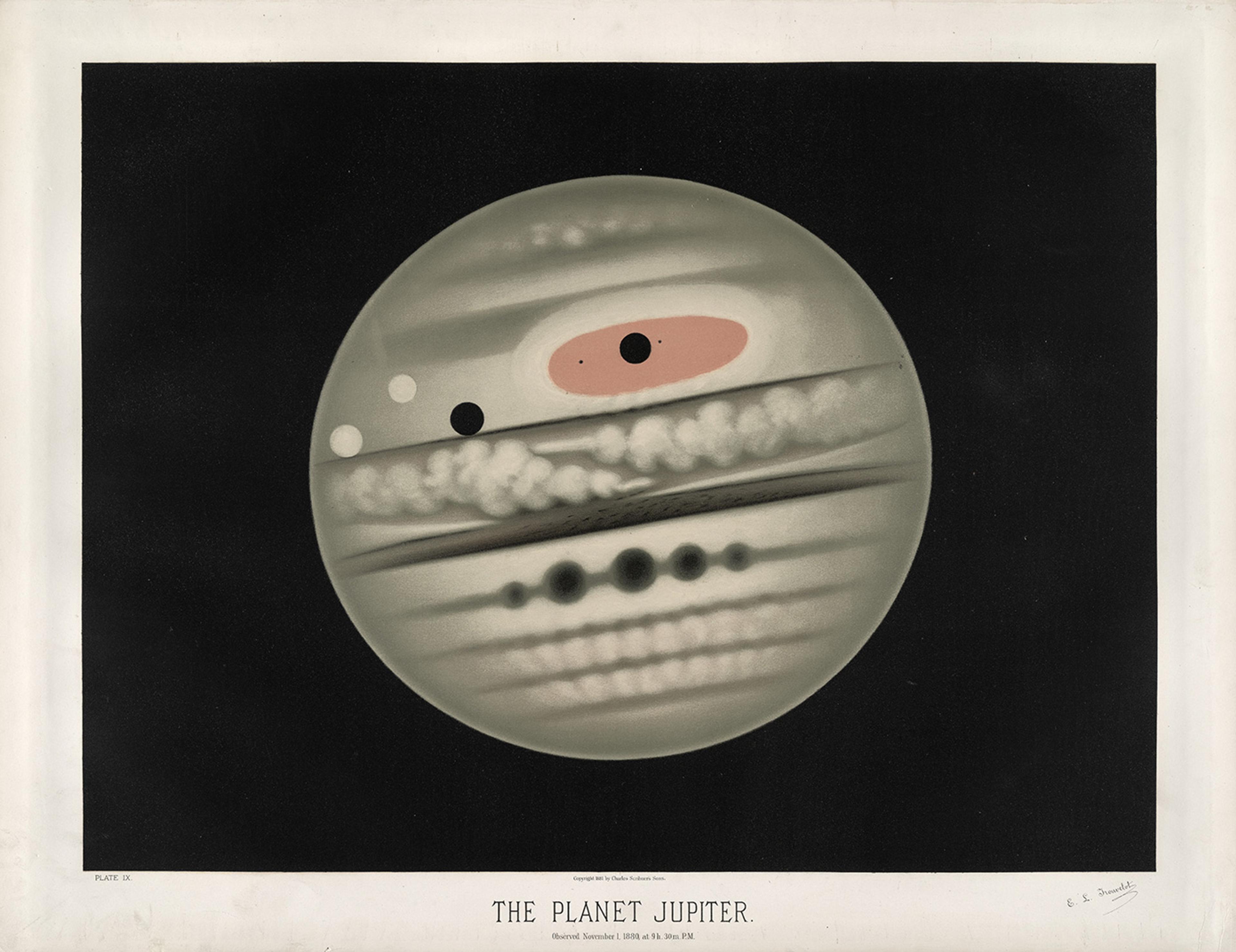
The Planet Jupiter (1882) by Étienne Léopold Trouvelot. Courtesy the New York Public Library
Now, on the surface, this statement – ‘the Universe is such that facts can be plainly stated within it’ – is an instance of the first kind of truth. That the Universe allows for factual statements appears to be a plain statement of fact: a truth of accounting. At a deeper level, however, it also exemplifies the second kind of truth, because there is no discernible reason why our universe must be so intelligible and so rationally ordered as to permit the existence of scientists and artists (let alone accountants). Any reason given would presuppose reason, and it is precisely rationality that is here to be explained. In other words, the very existence of the plain-fact universe is a mystery. More than this, it is a radical mystery, because it goes right to the root (from the Latin radix) of things, and encompasses them all. Merely in pointing out the fact of the world’s intelligibility, we are touching an ecstatic truth behind all fact and reason. We can count and measure things, and thereby reduce them to mere objects to be tagged and classified, but we can do this only because the things are there to be counted and measured, inexplicably.
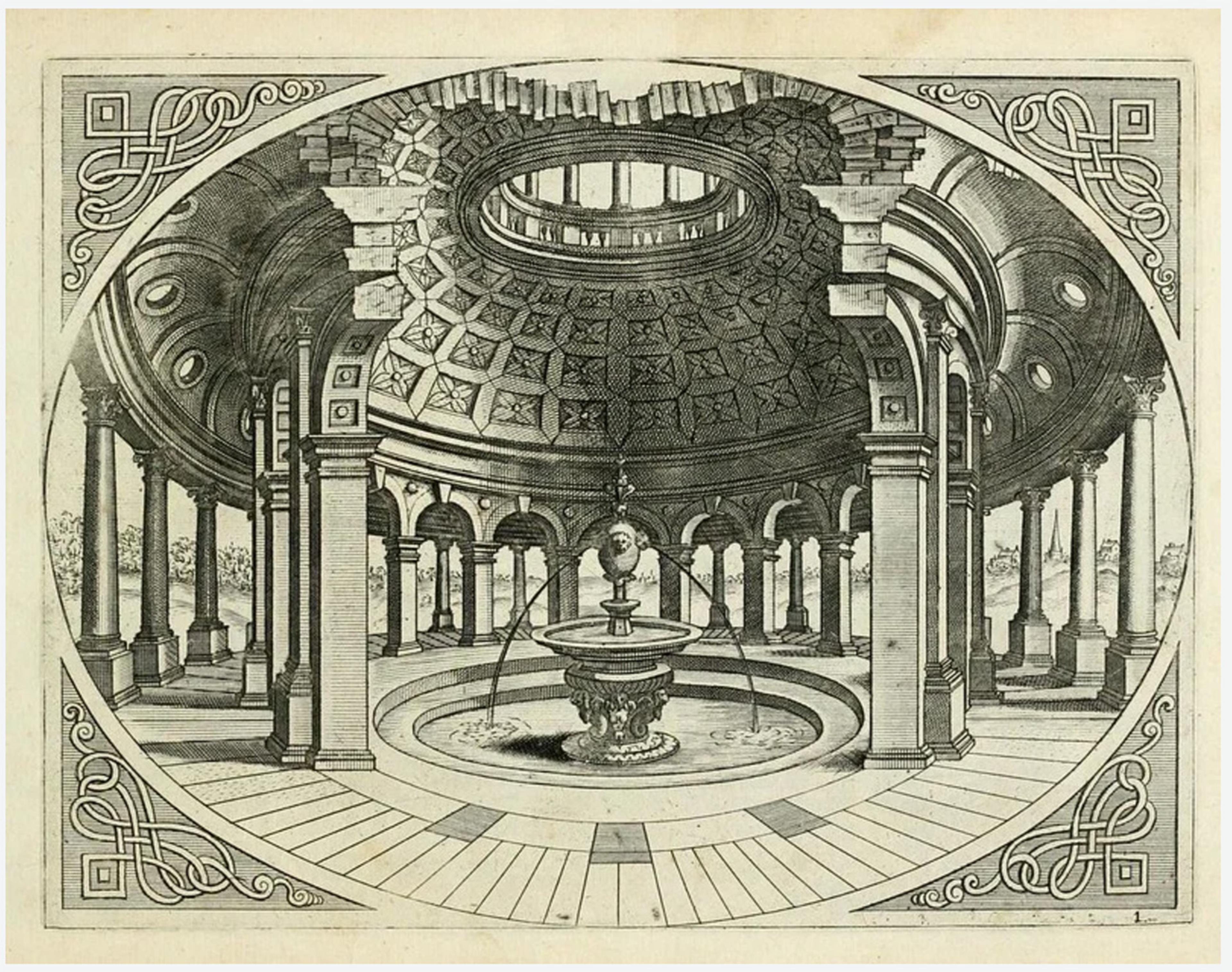
The art of geometers, from Various Forms of Architecture (1636) by Hans Vredeman de Vries. Courtesy Internet Archive/The Getty
In addition to telling us much about murders of crows, fields of wheat, darkling skies, and footpaths, van Gogh’s painting is showing us what it means to be alive on this planet, in this universe. No doubt it does this by means of the subjective ideas that critics and historians have found in the painting, such as mortality and despair (the picture was made shortly before the painter took his own life). But what the painting reveals through these themes is not subjective at all. It is, in fact, the one thing we can know objectively: the radical mystery that every event, by its mere occurrence, affirms. The mystery isn’t what the crows and the field mean, but that they mean, and that they mean because they have all come to be, just as they are. The truth of artists, in this deeper sense, precedes and contains the truth of accountants. It is what must be acknowledged – if only unconsciously, sometimes perhaps resentfully – before anything can be said to be worth counting or accounting for.
Herzog, I suspect, would agree that ecstatic truth is closely related to beauty, an ideal more explicitly associated with art. If so, then perhaps we need to also divide beauty into two kinds, roughly analogous to his two kinds of truth. Let us call the first kind ‘the beauty of the geometers’, and associate it with quantitative properties traditionally said to cause aesthetic pleasure: symmetry, harmony, proportion, regularity and so on. No doubt, there are strong evolutionary reasons why such properties are pleasing to the eye and ear, and thus appear beautiful in a narrow sense. Recognising this makes room for another beauty, this one immeasurable because it inheres not in regularity and generality but in the qualitative, the singular, the eventful, the unrepeatable, even the monstrous: beauty as the ecstasy of the strange and the new.
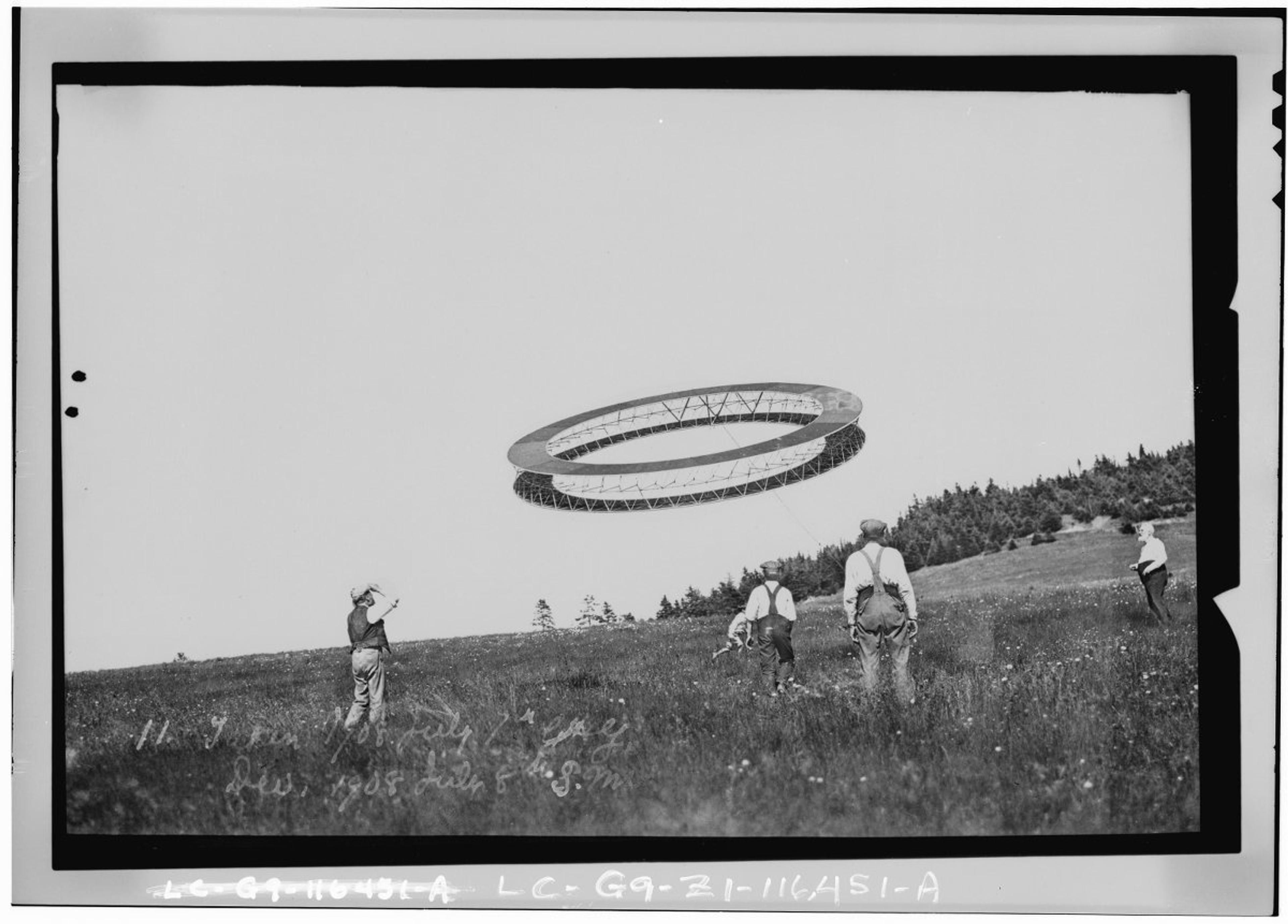
Alexander Graham Bell (right) and his assistants observing the progress of one of his tetrahedral kites, 7 July 1908. Courtesy the Library of Congress
Again, the two kinds are not opposed but interdependent. It is the rarity of perfect forms – their contrast with the predominant irregularities of the natural world – that makes symmetry and repetition so striking to our eyes. It is the fact that all could bottom out in chaos at any time that makes a Bach fugue stand out as an anomaly – a white shroud undulating gracefully in the depths of an abyss. By the same token, many events strike us as beautiful that contain not a hint of proportion or harmony. Edvard Munch’s The Scream of Nature, painted in 1893, deafens not by its music but by a hideous clamour that belies all normalcy and shapes the screamer’s world. If classical art excels at drawing the second kind of beauty from the first, modern art may be an attempt – sometimes successful, sometimes less so – to meet ecstatic beauty on its own ground. In painting, the examples do not stop at Munch’s scream; think of Vilhelm Hammershøi’s paintings of haunted rooms, Remedios Varo’s crystallised dreams, Francis Bacon’s broken souls.
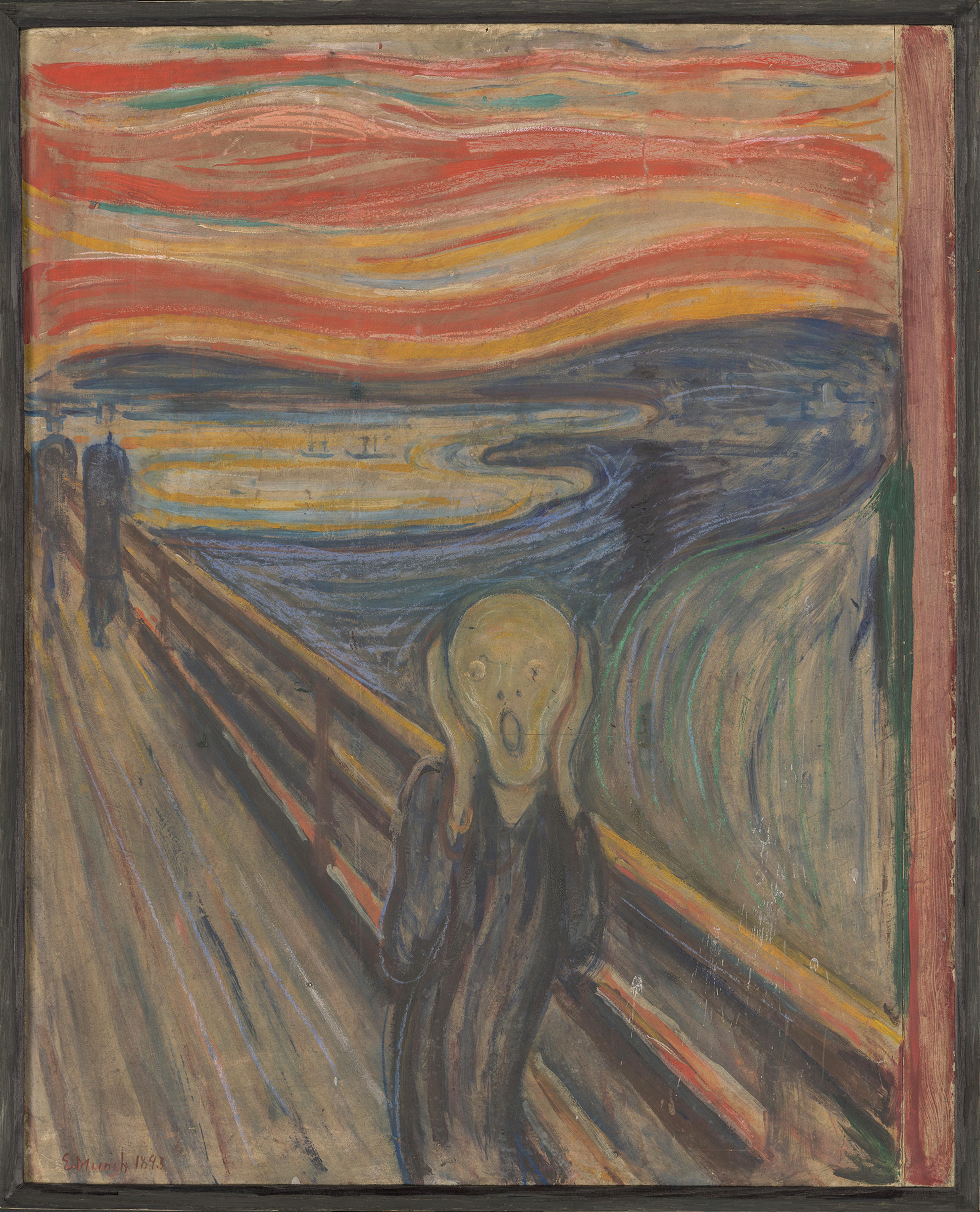
The Scream (1893) by Edvard Munch. Courtesy the National Gallery of Norway
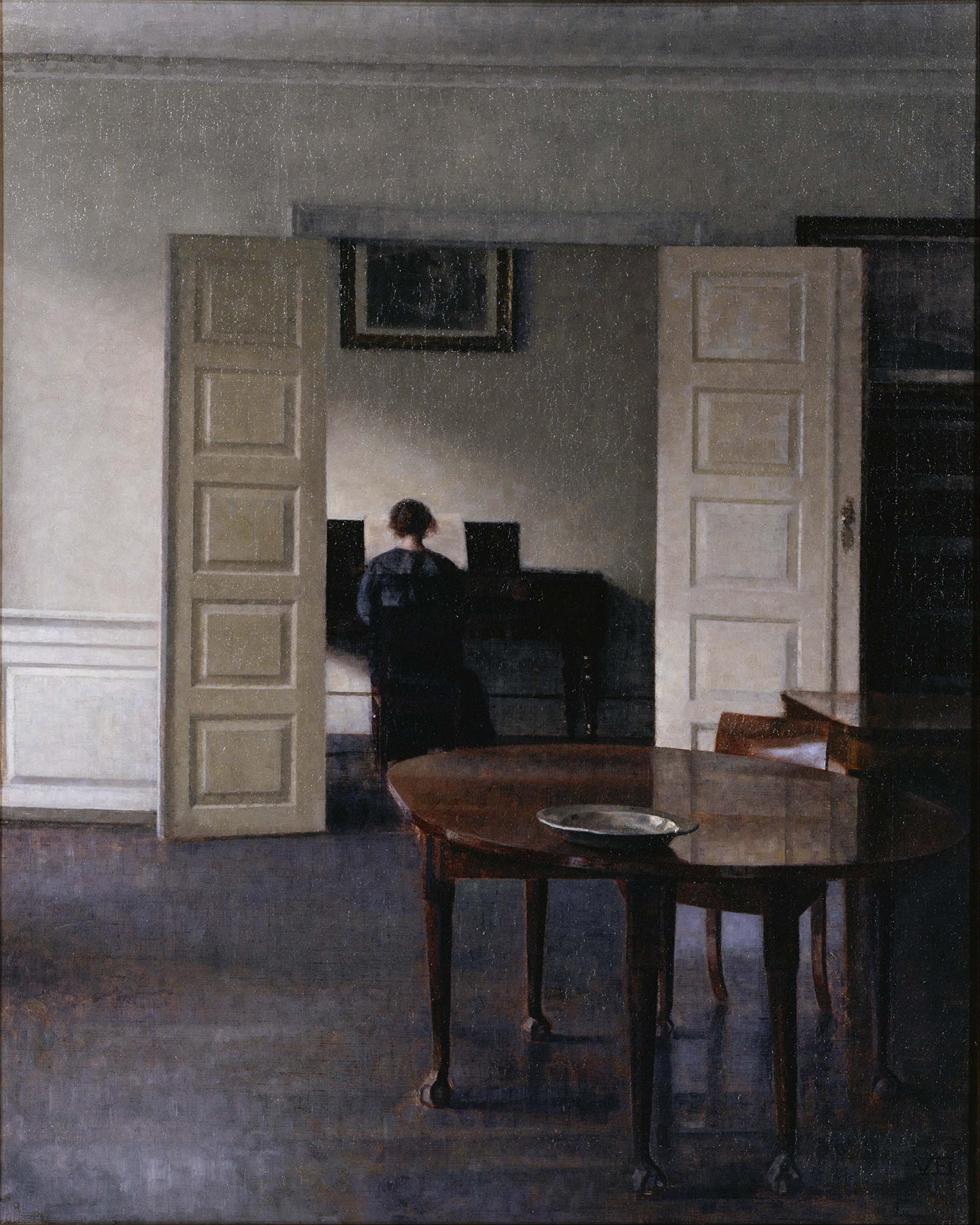
Interior with Ida Playing the Piano (1910) by Vilhelm Hammershøi. Courtesy Wikipedia
Like the second kind of truth, this kind of beauty inheres in singular events, never to be repeated. There is tragedy in its evanescence but also wonder: the wonder that anything happens at all. From this perspective, the message Keats hears from the Grecian urn – ‘Beauty is truth, truth beauty’ – makes perfect sense. Truth and beauty, though different when applied as general categories to things in the world, coincide when placed against the backdrop of radical mystery.
‘The Beautiful is always bizarre,’ wrote Charles Baudelaire in 1855 (my translation). ‘I mean that it always contains a touch of strangeness, of simple, unpremeditated, and unconscious strangeness, and that it is this touch of strangeness that gives it its particular quality as Beauty.’ In every experience of the beautiful, there is a hint of the weird. The moment may come with a sudden intake of breath, along with the thought: How can this be? Before the sunset, the nebula, the beloved: How can this be?
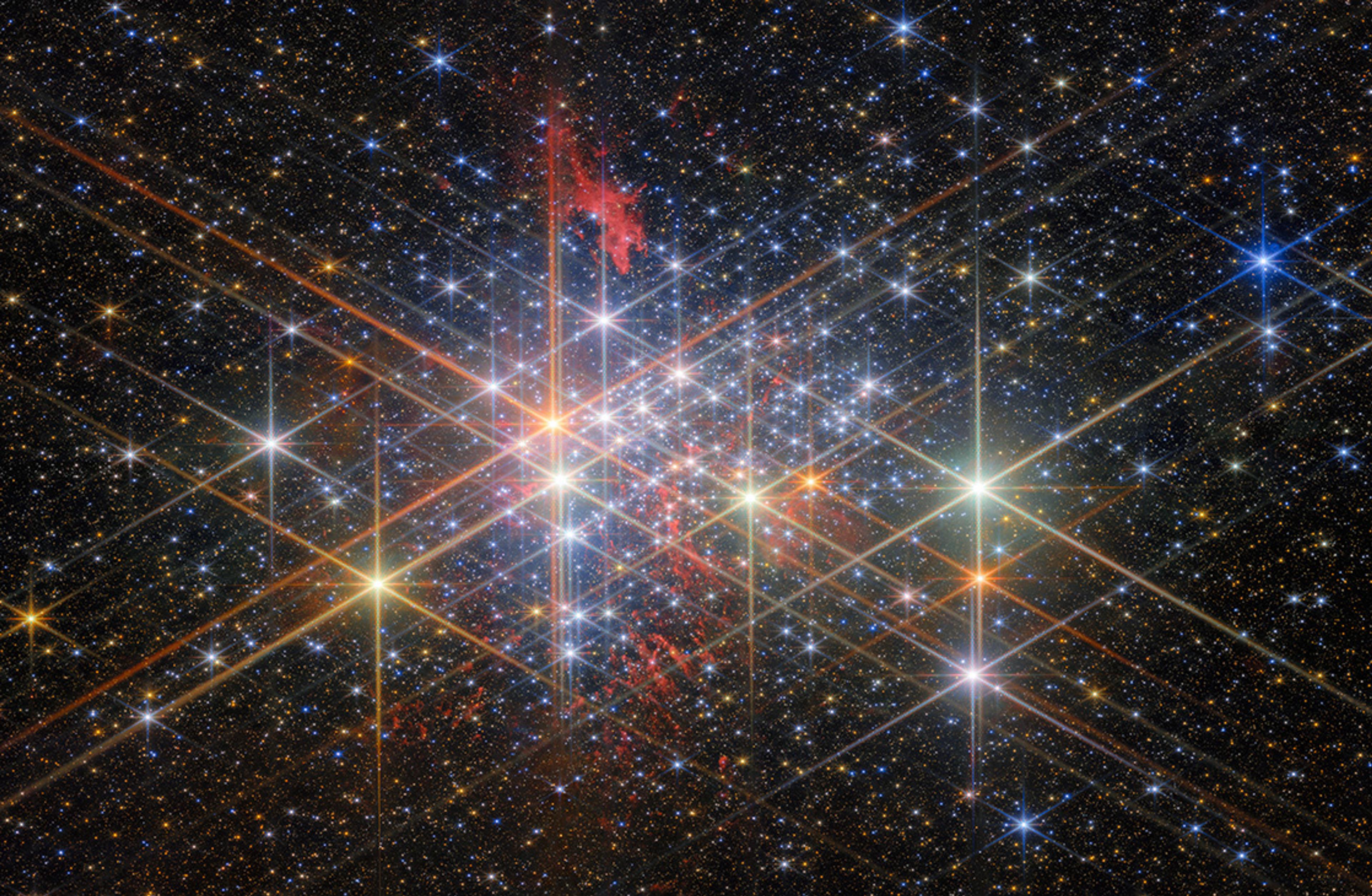
The exotic stellar population of Westerlund 1. Courtesy ESA
In beauty, we encounter a gap between what we expect to find in a material universe governed by physical laws – and what we actually find there, however rarely. To say that beauty is bizarre is to say that it is a kind of excess – but an excess of reality, not fantasy. More astounding than the fact that a world exists at all is the fact that the existing world should be so full of wonder and strangeness, because each instance of wonder or strangeness prevents the calculating intellect from clamping down on things and persuading us that we have figured them out.
Artifice may elevate or degrade, uplift or depress, edify or delude, but it transforms nothing
Two kinds of truth, two kinds of beauty. It follows that there must also be two kinds of art – similarly different and yet, somehow, complementary. The first is what I call artifice: art conceived so as to confirm, reinforce and extend the empire of facts in which we ordinarily live. Artifice corresponds to the first kinds of beauty and truth: the beauty of geometers; the truth of accountants. It may elevate or degrade, uplift or depress, edify or delude, but it transforms nothing. It leaves everything as it found it, because it proceeds from the assumption that the way we normally think of the world is enough for us to know how it really is. Examples come readily to mind: propaganda, pornography and advertising; sentimental, moralistic or didactic art; the countless works that merely reflect the ambient opinion of their time. That society needs artifice, and even benefits from some of it, I do not doubt. My only insistence is that it is not quite art. It does not do what art alone can do.
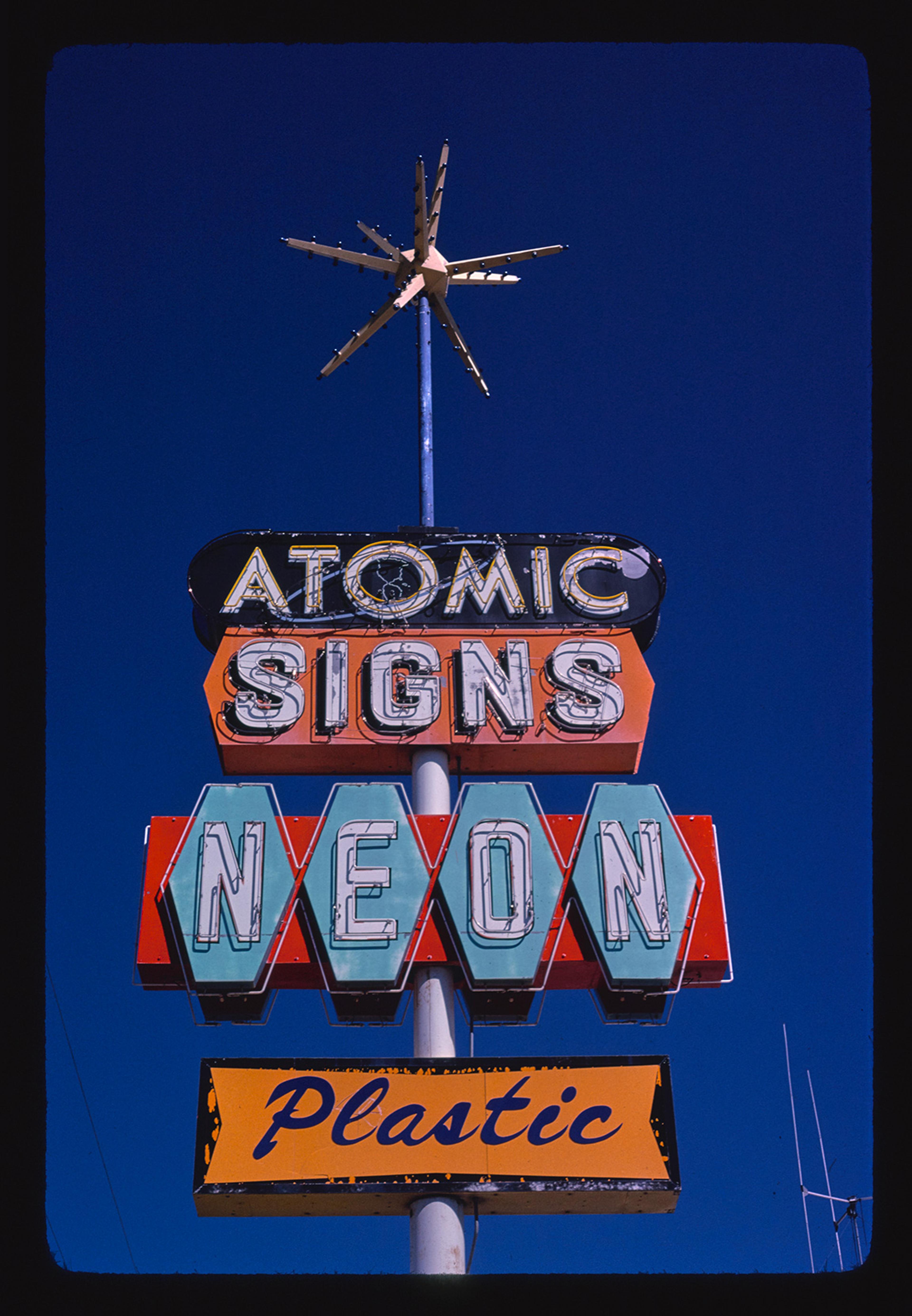
Atomic Signs Sign, Route 550, Farmington, New Mexico (1980) by John Margolies. Courtesy the Library of Congress
And what is it that art alone can do? Earlier I said that the existence of an intelligible universe isn’t one problem among many but a radical mystery. Ecstatic art (or what James Joyce called ‘proper’ art) puts us in touch with truth and beauty of the second order insofar as that mystery is affirmed therein. It cannot do this by merely representing nature, because to represent is simply to reproduce, changing nothing. Rather, proper art participates in the mystery of creation itself, the process through which the world emerges anew from the womb of nature at each moment.
The two kinds of art, then, approach nature from radically different perspectives. The 17th-century philosopher Baruch Spinoza, following certain medieval thinkers, articulated this difference when he distinguished between natura naturata and natura naturans. The first, natura naturata or ‘nature natured’, is the realm of cause and effect, the clockwork universe of discrete identities, neatly tagged with the labels by which we apprehend them. It is, in the language of William James and Henri Bergson, the world of ‘things made’, that is, of fixed objects that the mind has already carved up and captured in clean concepts and categories. When people say that a sunset is ‘just’ a sunset or a tree is ‘just’ a tree, they are inhabiting this universe and taking it as final. By contrast, natura naturans – ‘naturing nature’ – refers to the world of ‘things in the making’, the living movement by which all things come to be as events before they can be rendered as facts. It is not causal in the mechanical sense, but purely and bafflingly creative.
What astounds us when we enter a cathedral or contemplate a Mark Rothko is not merely the finished form of these works but the strange transformation each embodies. I know the stone to be impossibly heavy, yet I see it suspended as though lighter than air; I see the strokes of paint, yet the colour field feels all the more solid for them. Aside from this, it is the gratuitous contingency of the building and the painting – the undeniable fact that they might just as well never have been made – that takes my breath away. Their existence depends on an act of creation in time, a free decision to make, and by making, to enlarge the world and alter the terms by which it can henceforth be represented.
Turning from the painting or stepping out onto the street, I may in my astonishment see the world as though for the first time. Stripped of the overlay of familiarity that I habitually project upon it, everything appears to exhibit the very contingency I encountered in the artwork. The world itself suddenly seems the result of a creative act that continues even as I intuit it. If the experience is transformative, it is because it puts me in touch with the transformation that I myself am, the ongoing creation that my life as a human being represents – my participation in the weird process by which the world, even now, is a thing-in-the-making rather than a thing made.
What explains humans’ curious absence from the earliest signs of their presence?
Only humans produce ecstatic art. It is perhaps the one thing that might justify a kind of human exceptionalism. The truth is, however, that the very thing that makes us so exceptional is precisely what ought to safeguard us against anthropocentrism. If we look back to some of the earliest art known – the images found in caves around the world – we notice, remarkably, that it took thousands of years for human figures to take centre stage alongside the animals, monsters and abstract forms that the painters lovingly set upon the stone. Figures rendering the human body with the anatomical precision and individuality that Palaeolithic artists gave animals didn’t appear until the Neolithic Revolution, beginning around 10,000 BCE. Earlier human images exist – an abstracted face at Vilhonneur, painted around 27,000 years ago, and human-animal hybrids at Sulawesi, more than 48,000 years ago – but they’re never given the same treatment as the images of horses and bison at Lascaux. In fact, human figures with detailed heads, torsos, arms, legs and, most importantly, faces, emerged only around 8 millennia after the Lascaux paintings were made. It’s true that some of the very oldest cave art features stencils of human hands – but what is the hand if not the place where the human touches the nonhuman, the very interface of self and world?
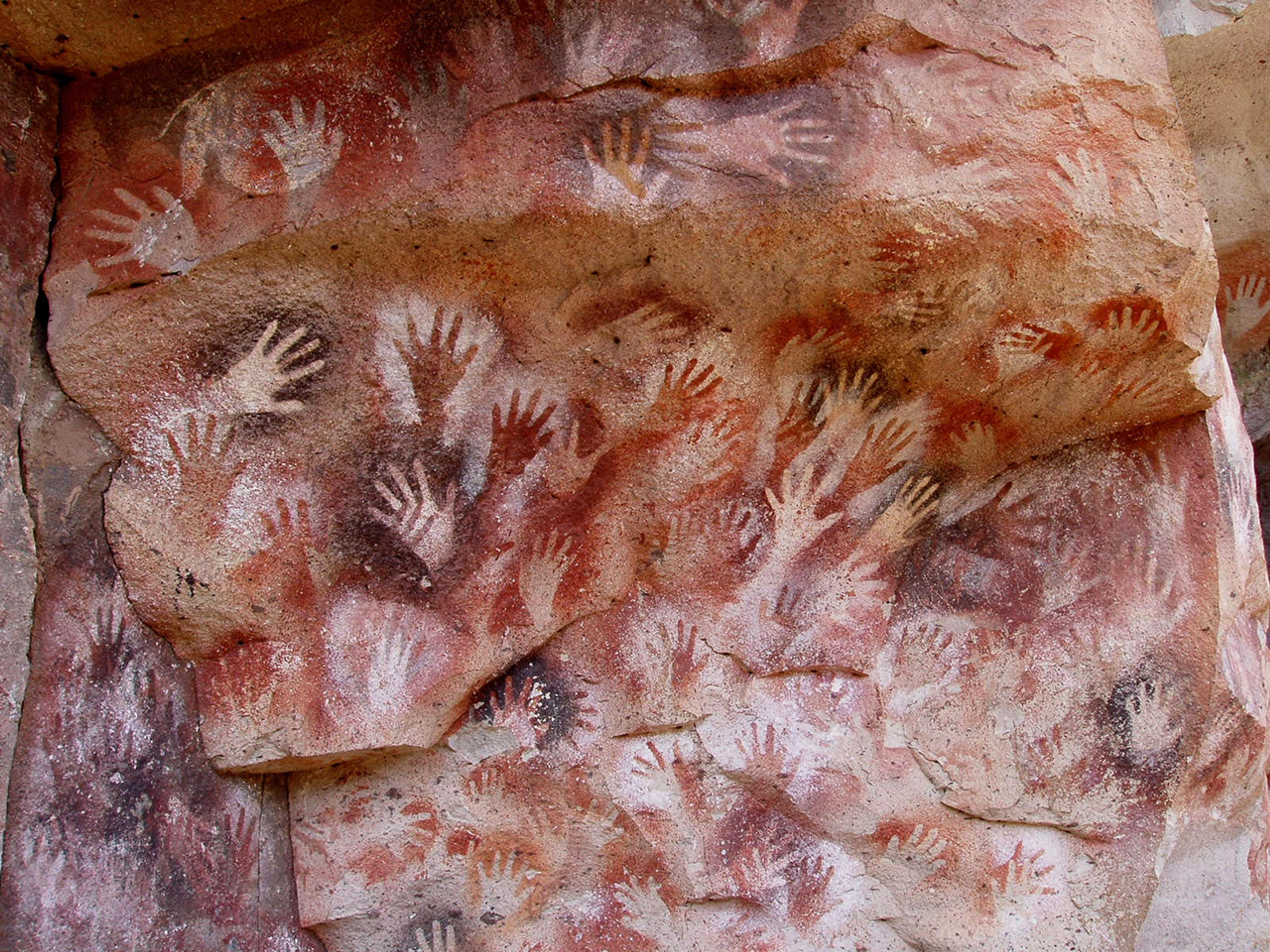
The Cueva de las Manos, Río Pinturas, near the town of Perito Moreno in Santa Cruz Province, Argentina. Courtesy Wikipedia
If art were, at bottom, the narcissistic endeavour that Sigmund Freud and others took it to be, we would expect to see human figures everywhere from the start. What explains their curious absence from the earliest signs of their presence? Perhaps art is not primarily concerned with the human so much as with the spectacle of the real, in which the human plays an infinitesimal part. It was in looking up at the stars in the moonless sky, or at the aurochs on the distant ridge, that the artistic imagination was born.
Art has never been a celebration of humanity, but always an exploration of those borderlands where the human ends and something else begins. This applies even to art dealing with seemingly human ideas, feelings and things. Only through art can a city become a jungle, a house an alien structure, a sadness a kind of weather event.
At first glance, we might say that prehistoric cave paintings offer strong evidence for the old philosophical idea that ‘art imitates nature’. Early humans, impressed by ‘things made’, chose to commemorate them in representations. But Spinoza’s distinction between two kinds of nature permits a different interpretation, one that considers not only the identity of the figures in the caves (a rhinoceros, a horse, a star) but also the expression in the images, the artfulness that allegedly led Picasso to say that the Lascaux painters had invented everything.
The things on the cave walls are not quite those that a scientific mind, intent on measurement and quantification, would recognise. For they appear there as things-in-the-making. And if it is true that nature is creative before it becomes causal, magical before it becomes mechanical, then we are within our rights to say that it is always-already art, and was so from the beginning. Everything is a process of change, a becoming whose course we halt – mentally and thus artificially – when we tag it with a fixed identity, a concept.
The practice of making images, repeated over hundreds of generations, occasioned the emergence of minds
What is true of animals, plants, rocks and stars is also true of human beings. By the time we fully appear in the caves, we do so as figures in a drama that is at once material and imaginal, physical and psychic, and altogether more than human. The idea, then, that human beings invented art, that art ‘belongs’ to humanity, is true only after the fact. In a more primordial sense, art invented humanity by giving humans access to the process through which it brings forth a world, along with everything else.
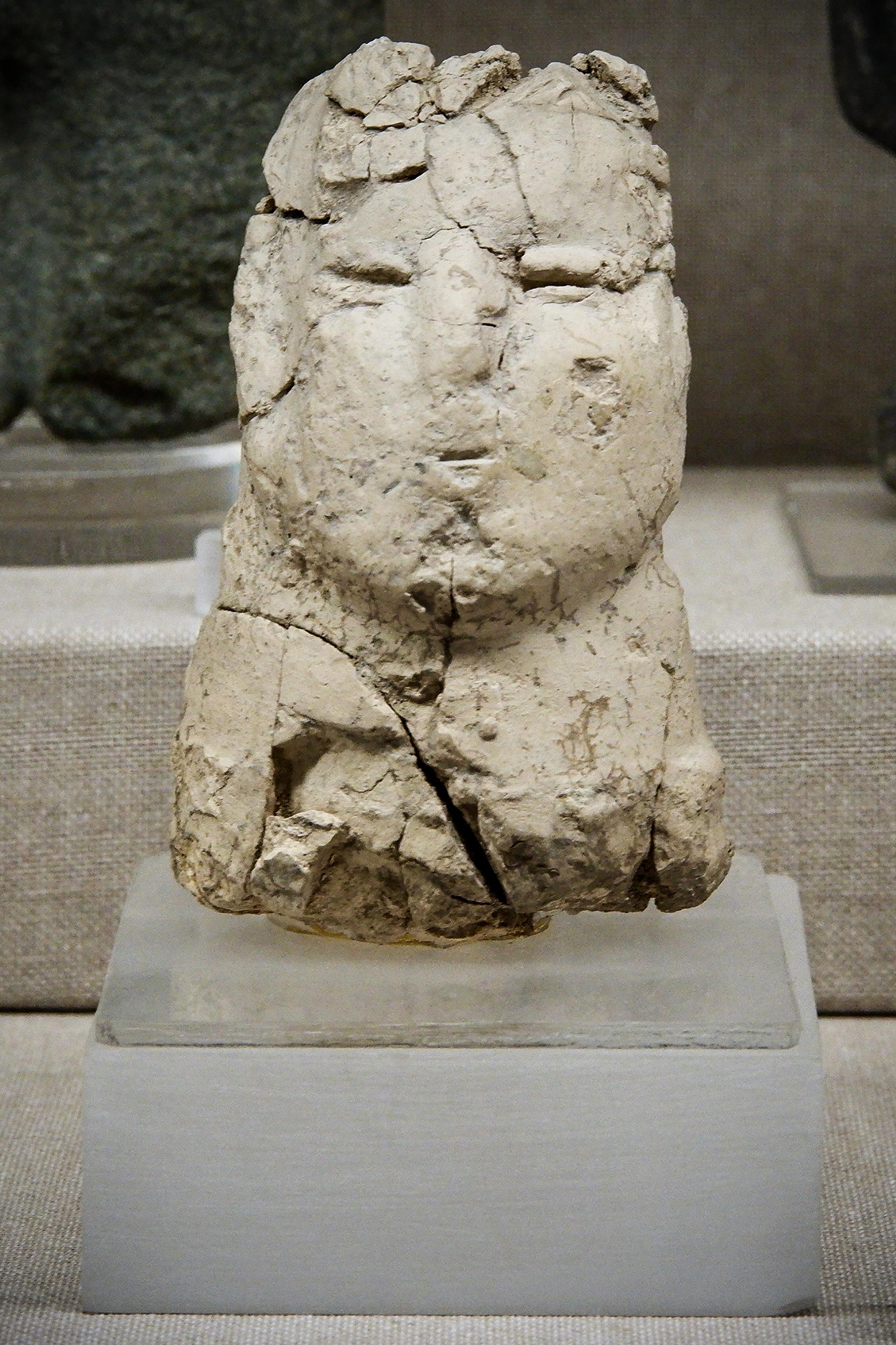
Clay female head figurine from Khirokitia, Neolithic period, Cyprus Museum, Nicosia. Courtesy Wikimedia
What I mean here is that art did not serve to express a humanity that already existed. Rather, it acted as the mirror we needed to catch sight of our own image in the flux of nature. The question of when humans invented art leads us to imagine early humans much like ourselves, deciding one day to express themselves through symbols and figures. The assumption hidden in the question is that they already had minds like ours and simply chose, out of all the things they might have done on a frigid day in the Ice Age, to pick up ochre and make animal pictures. But the evidence, it seems to me, points the other way: it was the practice of making images, repeated over hundreds of generations, that occasioned the emergence of those minds we take for granted. We are putting the cart before the horse when we understand ourselves as the source of sense and meaning. In reality, we are participants in something that exceeds us, and the aesthetic, poetic dimension of great art reconnects us with that excess as a matter of course.
But again, we are led back to two kinds of art. Artifice is art that imitates nature: an attempt to represent the world on human terms, resulting either in imperfect reflections (according to Plato) or in perfected abstractions (according to Aristotle). Real art, by contrast, enacts natura naturans – that is, creation as such. If we can speak of imitation here at all, it is not in the sense of mechanical copying but of what the Christian mystics call imitatio Christi: the imitation that becomes instead of merely aping, a creative event transcending all the ways in which the intellect reduces things-in-the-making to things made.
Art alone puts us in touch with certain kinds of truth and beauty. And in that way, art restores us to reality. For it to succeed, however, it must be left to its own devices (or lack thereof). It must be free to eschew the logic of utility and to embody the freedom we stifle under the pressures of means-and-ends thinking.
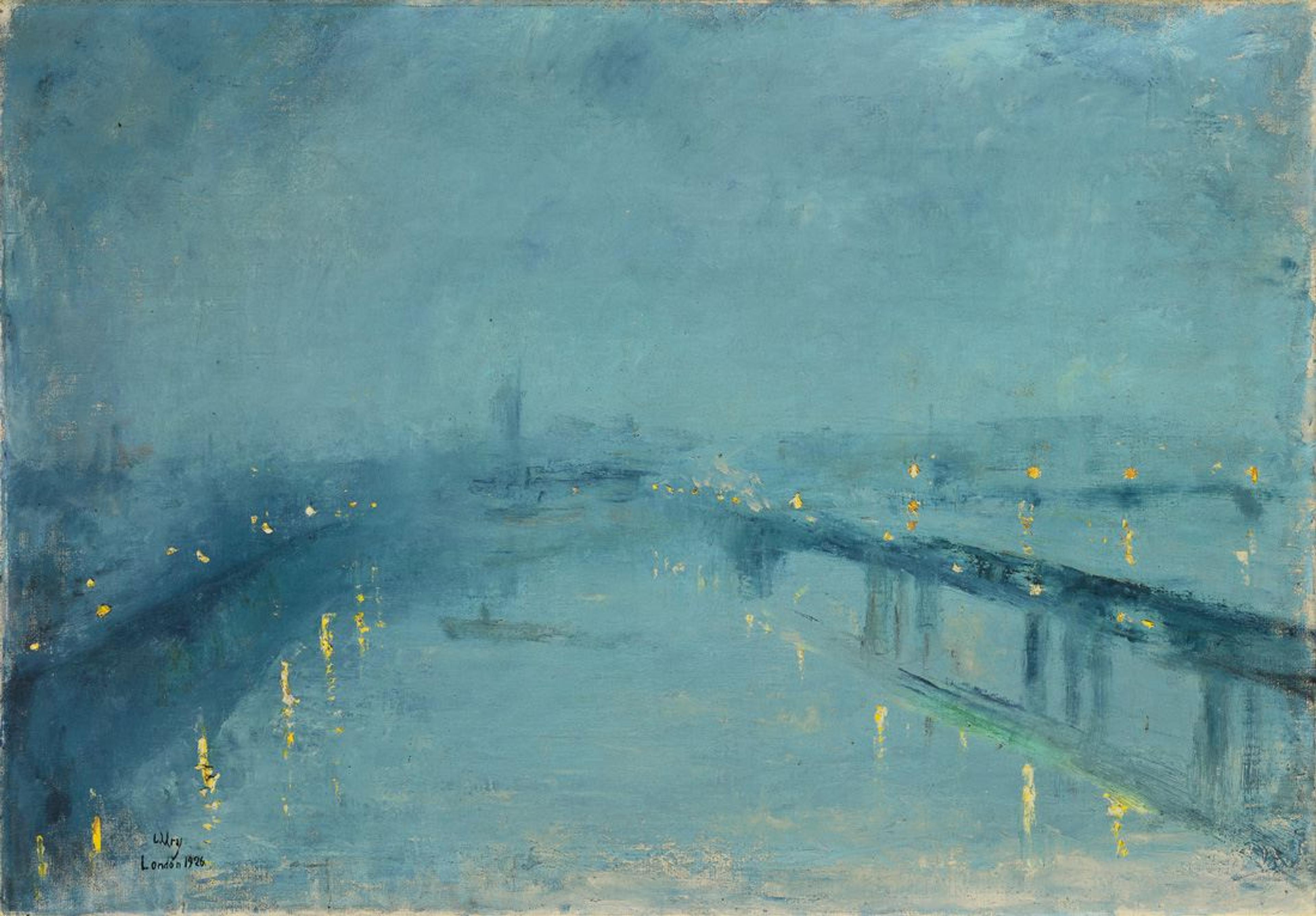
London in the Fog (1926) by Lesser Ury. Courtesy Wikimedia
‘All art,’ quipped Oscar Wilde in the preface to The Picture of Dorian Gray (1890), ‘is quite useless.’ For Wilde, art necessarily and essentially serves no purpose – and artists ought to know better than to wish it otherwise. At the same time, he elsewhere argued with equal conviction that if it weren’t for the efforts of the Impressionist painters, the London fog would not exist. It was they, he claimed in ‘The Decay of Lying’ (1891), who brought forth this aspect of the world, which had gone unseen until then:
Where, if not from the Impressionists, do we get those wonderful brown fogs that come creeping down our streets, blurring the gas-lamps and changing the houses into monstrous shadows? … The extraordinary change that has taken place in the climate of London during the last 10 years is entirely due to this particular school of Art … One does not see anything until one sees its beauty. Then, and then only, does it come into existence … There may have been fogs for centuries in London. I dare say there were. But no one saw them, and so we do not know anything about them. They did not exist till Art had invented them.
Claude Monet and his circle did not represent what was already present; they made present what had hitherto been absent. This power to make us see, for Wilde, is what makes art invaluable.
Is there a contradiction here? How can art be both invaluable and ‘quite useless’? It depends on how we define that last term. One might argue that if nobody paid attention to the fogs that crept through Victorian London until then, it was because there was no use in doing so. By attending to what no one cared to notice, the Impressionists drew from the invisible background of the human world a new entity that then became impossible to ignore. If art is useless for Wilde, it is only in the sense that it explores those regions of reality for which our present intellect has found no use – at least not yet. By making visible that which we could not see, to paraphrase Paul Klee, art expands our perception of the world. It thus fulfils a function precisely analogous to that of science; but whereas science is driven by an ideal of utility, art seeks what has not yet appeared on our radars. Artists alert us to what we do not yet know we do not know. Through their work, new realities, new ideas and new emotions become available.
Art is useful only if it is allowed to remain entirely useless – that is, entirely free to go where it will
Indeed, science begins – and can only begin – in the world that art has made. Ultimately, what we call art is the fruit of the human imagination’s capacity to go beyond immediate perception, to dream what lies around this corner, outside the human world. From this point of view, the hypothetical stage of the scientific method is nothing less than art: an exercise through which we step out of the mundanities of the actual to explore the possible as such, testing our dreams and extending our reach into the more-than-human.
This is why the French philosopher Gilles Deleuze in 1968 described aesthetics as a ‘science of the sensible’. Art, for him, makes the world that science later measures, but the world it makes is ultimately beyond all measurement because it is the world that exists before we divide it into lengths, magnitudes and quantities. Bergson, a major influence on Deleuze, had called this a ‘qualitative multiplicity’, closer in nature to a continuous melody than to a series of discrete, static things that can be isolated from one another. It is what comes first, because it is the Real itself.
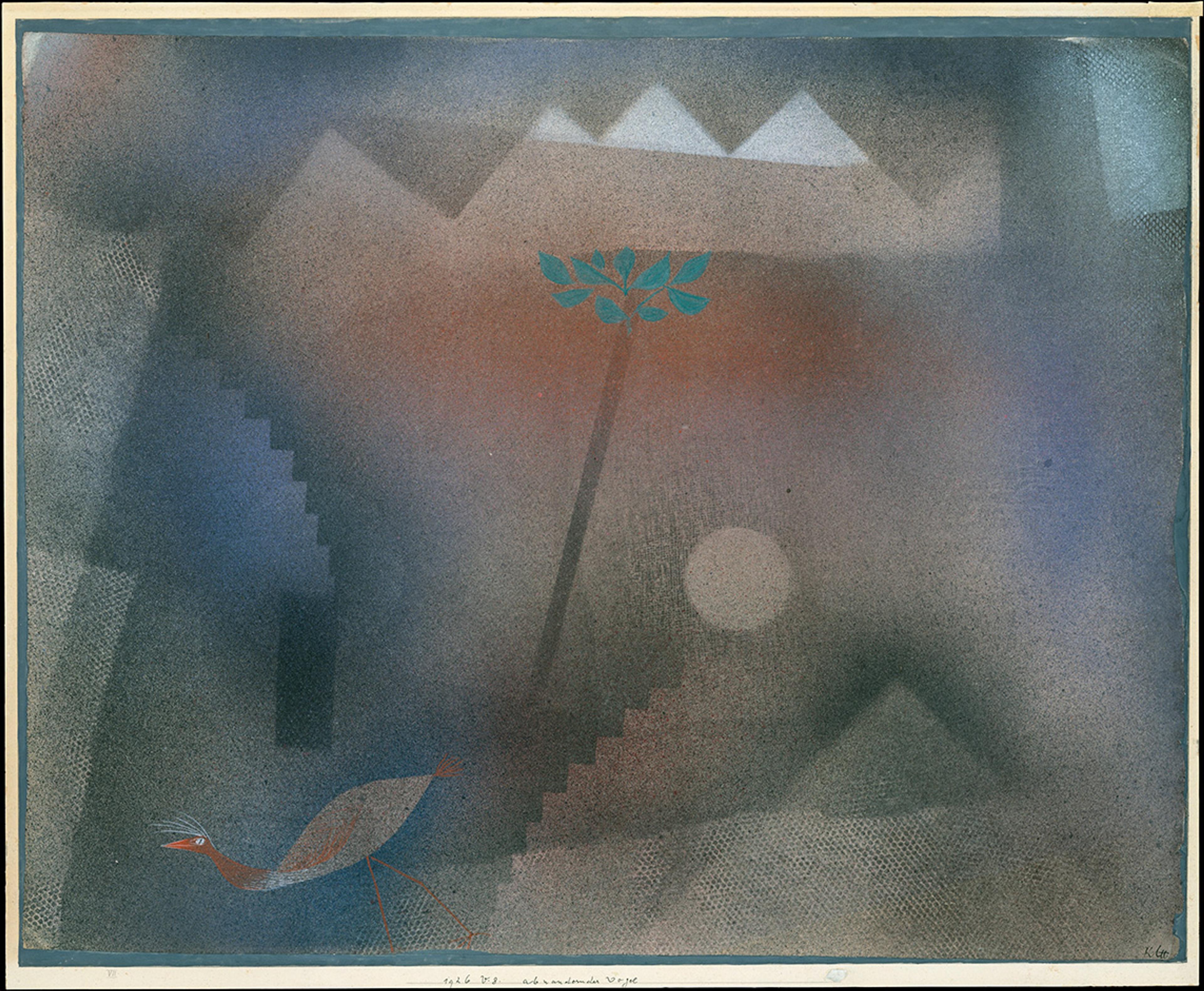
Bird Wandering Off (1926) by Paul Klee. Courtesy Wikimedia
Paradoxically, art is useful only if it is allowed to remain entirely useless – that is, entirely free to go where it will. Wilde finds an ally here in Baudelaire, who followed his observation of the strangeness of the beautiful with a sharp rebuke to those who would subordinate artistic beauty to a utilitarian logic. Baudelaire asks:
How could this necessary, irreducible, and infinitely varied strangeness … ever be controlled, amended, and corrected by Utopian rules conceived in some little scientific temple or other on this planet, without mortal danger to art itself?
The privileging of utility over uselessness, of work over play, is the death of art – and the death of the given world in which our utilitarian spirit must be grounded if it is to have purpose and meaning.
Today, art is pressed upon by forces that would subordinate it to all-too-human ends. Some say that it should educate and elevate impressionable minds, training them to behave in accordance with a preexisting moral code. Others claim that it should play a therapeutic role, either as an instrument of medicine or as a means of escape by which workers might regain their strength before the next working day. Still others insist that art ought to serve the needs of the state or the market, upholding the preconceived ideas of a polity that mistakes its limited view of reality for the whole of reality. The rise of artificial intelligence has only intensified this levelling of art into non-art. By definition, artificial intelligence is capable only of artifice, since it inhabits a virtual universe of things made (data) rather than things-in-the-making. To fail to distinguish between the artifice it generates and the true art it imitates is to mistake representation for creation, and so to blind ourselves to the very source of what makes both art and humanity possible.
Art must remain useless (or become it again), and it must do so in the name of truth as well as beauty. At the beginning of this essay, I distinguished two forms of each of these ideals: one that merely confirms what we think we know, and another that reminds us of the mystery that underlies all our partial knowledge and imperfect beliefs. Above all, art confronts us with that radical mystery, without which our problem-solving and utilitarianism would be pointless. This mystery is not a theory but a truth, the very ground of that truth whose splendour Plato called beauty, Herzog called ecstasy, and Keats, speaking to his urn, declared to be one with truth itself. It is ecstatic because it takes us outside ourselves, connecting us with the wonder that burns at the heart of the world, and which, out of every search for answers, calls forth new questions – and, with them, new reasons to live.