The neverending house

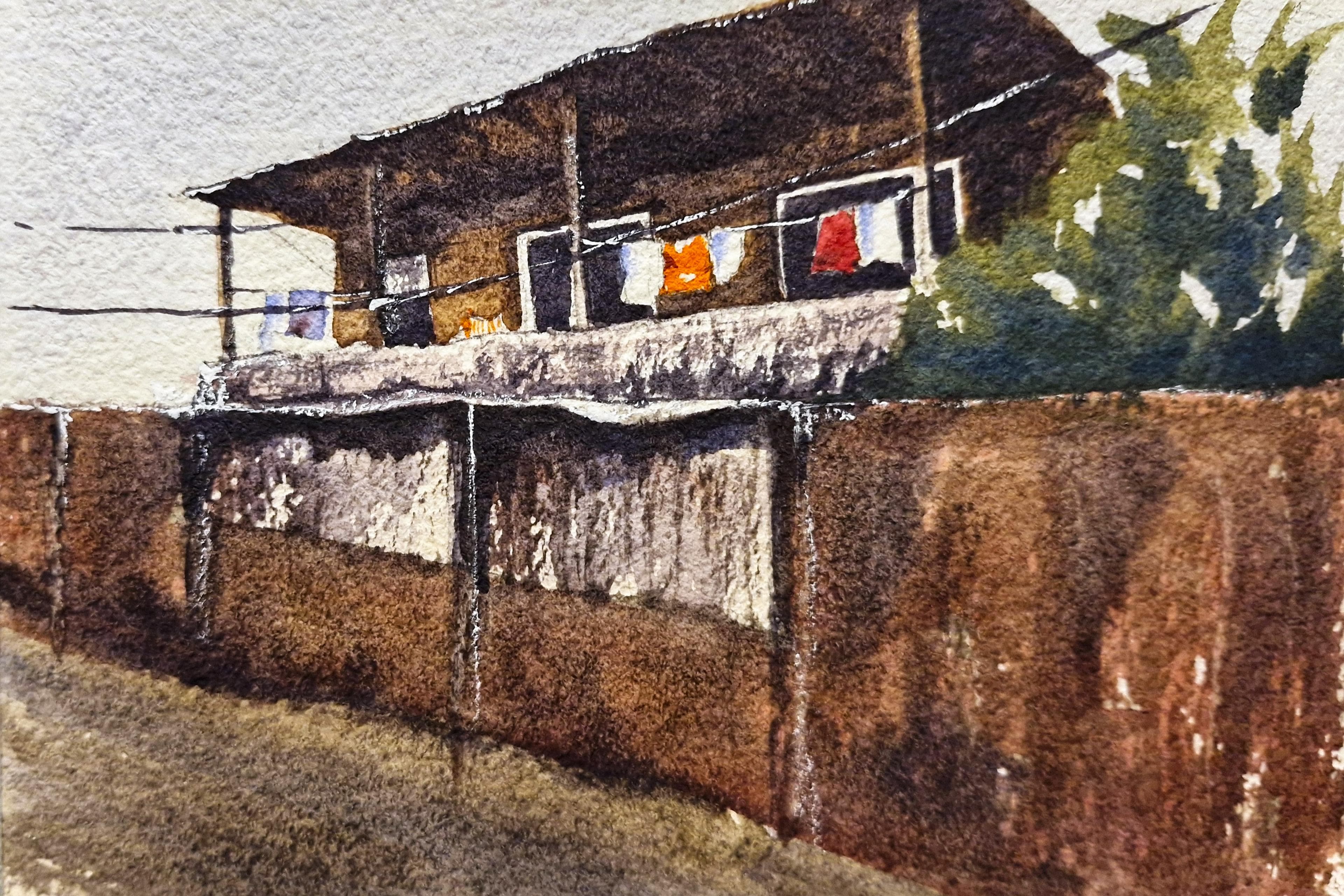
The self-built homes of Santiago are precarious and ever changing. They are, always and at once, being and becoming is assistant professor in the Faculty of Social Sciences at Universidad de los Andes in Chile. Her work focuses on domestic life, kinship and residence, articulating ethnography with phenomenology to examine how, in organising and experiencing domesticity, people take part in the broader process of making the world a home.
Few problems feel more pressing today than housing. Across the world, access to affordable, stable, dignified housing has become one of the defining challenges of our time, in wealthy capitals and struggling peripheries alike. According to UN-Habitat, more than 2.8 billion people – roughly 35 per cent of the global population – lack access to adequate housing. Rents rise faster than wages; ownership recedes as an aspiration for younger generations; entire neighbourhoods are reshaped by speculation and displacement. The question of who gets to live where, and on what terms, sits at the heart of contemporary urban life.
This is not a new problem. In The Housing Question (1872), Friedrich Engels identified it as a structural consequence of industrial capitalism: as workers flooded into cities, the market and the state proved incapable of providing, or unwilling to provide, shelter for all. From that moment, housing became a political question. Over the following century, governments across the developed world came to assume that the solution lay in their hands: through public construction, regulation, subsidy, and the organised machinery of mortgage markets and mass homeownership. Housing was a problem to be solved – technically, bureaucratically and financially. Today, that problem has only deepened: a global crisis of affordability and tenure grips cities across the world, and housing is drawn ever further into the circuits of finance and speculation.
Yet across much of the 20th century, in the rapidly urbanising cities of Latin America, Africa and Asia, the state-led housing paradigm never fully took hold. Cities grew faster than any state or real-estate market could manage. Millions gained access to housing – and to the city itself – not through the formal mechanisms of policy and planning, but by occupying land, building by hand and gradually, generation by generation, turning bare earth into home, in ways that the state variously resisted, tolerated, regularised or actively supported. In countless such cities, self-built houses and neighbourhoods were not an exception to the urban order; they were intrinsic to how the city was made.
Join more than 270,000 newsletter subscribers
Our content is 100 per cent free and you can unsubscribe anytime.
Daily: A daily dose of Essays and Videos
Weekly: A week’s worth of big ideas
Sign up
I’m already subscribed
The precariousness, informality and lack of top-down planning that characterise access to shelter in the cities of the Global South may well justify seeing them as a failure – a sign of governments’ and societies’ inability to adequately resolve the housing question. And yet, somewhat paradoxically, it is precisely among self-built environments that housing can be seen from an angle rarely present in mainstream debate, and nonetheless fundamental: that any serious attempt to understand how societies provide a place to live must first ask what it means to live somewhere at all, and what role the house itself plays in that. In simple words, that behind every housing problem lies a dwelling problem. Behind the pervasive technical illusion of the house as object, commodity and asset, the building-dwelling bond tends to disappear. By contrast, in self-building, that relationship remains exposed and alive, woven into the life that the house makes possible, and that makes the house possible in return. Two decades of fieldwork in the urban margins of Chile’s capital Santiago have led me to see, in this little-by-little, intergenerational, unfinished way of making one’s own house, an experience of building that has something to teach us about the art of dwelling.
I came to the question of the house long before I had any concepts for it. Victoria worked in my family’s home when I was a child and, for as long as I can remember, I knew her through the story of her own house – a story I first overheard in her conversations with my mother, and which years later, when I began my first fieldwork on domestic life in Santiago, became the first I set out to study, and the one I have returned to ever since. Her house was Victoria’s favourite subject of conversation. Whenever we talked, it would intrude everywhere: in anecdotes, in complaints, in memories, even in the most ordinary exchanges about almost anything.
Victoria was already an older woman when I first interviewed her in 2007, early in what would become ongoing fieldwork on domestic life in Santiago. She had retired some years earlier, after a lifetime as a domestic worker, due to advanced diabetes. Born in a very poor village of seaweed gatherers, Victoria ran away as a child from the foster family her birth mother had placed her with. She barely attended school, and while still an adolescent she joined her life to the man who would become her husband. With him she had six children – the first before she turned 15; the youngest, disabled, already in his 40s – and she became a great-grandmother before 50.
Four generations had lived under Victoria’s roof – by rearranging rooms or by adding new ones in the backyard and on top of the house
If many of the topics we discussed were, for her, a source of complaint – particularly those concerning her health and the everyday tensions among her relatives – Victoria seemed to take a particular, almost contagious pleasure in describing the smallest details of how the house had been built from the moment they arrived, when the plot was ‘nothing but bare earth’, as well as its successive transformations and its ongoing plans, improvements and repairs.
I was struck by her meticulous attention to materiality and to specific quantities – a sack of cement, two sheets of corrugated zinc, 10 metal bars for the gate – the exact inputs she and her husband were constantly using. Certain words began to acquire a new meaning for me in this context. They were ‘closing’ (cerrando) the plot – building the wall that separates the house from the street. They needed to ‘line’ (forrar) the interior wooden walls – adding a second layer of boards to insulate them better. She spoke of needing to ‘raise’ (levantar) the kitchen floor, of building a terrace; at one point she had had to ‘raise the radier’ – to cover the concrete slab with an additional layer of cement. She dreamed of ‘finishing’ (terminar) the bathroom, which she had never managed to build entirely in material – by which she meant cement and brick, as opposed to wood, which was not considered a proper material because it was not as solid and durable. These were often long-term and discontinuous processes, unfolding in stages and marked by pauses and resumptions.
The neverending story of the making of Victoria’s house was intimately intertwined with another story that unfolded in our conversations: the gradual and constantly reconfigured settlement of her children’s families. Over time, as many as four generations lived under Victoria’s roof – whether by rearranging existing rooms or by adding new ones in the backyard and on top of the house. Such intertwining of materiality and relatedness becomes especially clear in a conversation with one of her daughters. A few years earlier, after three decades in her mother’s home, she had moved to a small, rented house behind another property nearby, in order to make space for her own grandchildren. ‘If you have problems,’ she said to me, ‘the only place to go is your mother’s. If my husband tells me to leave, I come back here. You know that your parents will always open the door to you. My parents have never closed their doors to their children – never.’
And yet the same house that never closes its door can also close in. Victoria, who took such pleasure in recounting how it was built, spoke of those years in another register too: ‘crowded together’ (todos amontonados), ‘you cannot fight for your life, fight for yourself’. She still dreamed of the terrace, the small garden, the raised kitchen floor she never had room to finish. Here one glimpses the enduring strength of the moral expectation to welcome one’s children, and the extent to which home-leaving is understood as reversible. The house appears as something pliable – and that pliability cuts both ways. It can crowd and exhaust as readily as it can shelter; but because it is never finished, it holds the conflict open, as something that might yet be eased by a room added at the back, a wall moved, a life rearranged. A ‘definitive house’ forecloses that wager. The self-built one keeps it alive – for better and for worse.
Victoria’s story is part of a broader reality among poor urban populations across Latin America, where roughly a quarter to a third of urban residents have lived in informal housing conditions as cities expanded through the late 20th and early 21st century. In Santiago, much of what is now the pericentral belt took shape between the 1960s and ’80s through a precarious process of informal occupation of marginal land and later state-regularised poblaciones that shaped the city’s growth. These are neighbourhoods slowly and collectively assembled by hand over multiple generations – their houses, streets and public spaces still bearing the marks of that history, as do the family configurations and forms of local sociability, as well as civic and political participation, that took shape within them.
Although it may be technically correct to consider the self-built house as merely one particular residential typology among others, I have come to think otherwise. I arrived with the vocabulary of deficit – informality, overcrowding, the housing unit to be counted and completed – and the field slowly took it apart. In all their precariousness – and perhaps partly because of it – self-built houses reveal some conditions without which a place cannot truly be lived as a house. These are conditions just as present, though far harder to see, in the finished and affluent houses I have also studied across Santiago. This is why I see the self-built dwelling not as a type but as an archetype of housing – not because it is exemplary, but because it is revealing: in it, what every house already is becomes visible.
I found a philosophical grounding for this intuition in Martin Heidegger’s essay ‘Building Dwelling Thinking’ (1951), in which he reflects on the deeper relation between dwelling and building in order to illuminate what he calls the plight of dwelling in our time. The text was first delivered as a lecture at the Darmstadt Colloquium, a gathering of architects, philosophers and intellectuals convened in the context of the postwar reconstruction of a defeated and devastated Germany. The colloquium took place at a moment of intense pressure to industrialise construction and address a massive housing shortage. The question at stake was whether reconstruction should be guided primarily by technical efficiency and standardisation, or whether the problem ran deeper – touching on the very meaning of dwelling in the modern age. What Heidegger diagnosed in relation to industrialised building has since been intensified by the financialisation of housing.
These houses remain open and adaptable. They are built slowly alongside the making of kinship and personhood
Heidegger’s argument begins by acknowledging the widespread – and understandable – urgency to build large numbers of houses. Construction becomes the object of diagnoses, planning schemes, industrial coordination and commercial enterprise, all directed toward the efficient production of dwelling units. In this framework, building appears as a technical and economic task, and houses as functional objects designed to provide shelter. Against this backdrop, Heidegger shifts the question. However acute the housing shortage, he writes, the ‘real plight of dwelling’ does not lie simply in the lack of houses, but in the fact that we have yet to learn how to dwell. Building efficiently doesn’t guarantee that what is built can be truly lived in.
Within the technical paradigm, dwelling and building appear as sequential: we build in order to dwell. Heidegger reverses the assumption. We build because we dwell. This is not simply a reversal of cause and effect. It is a more radical claim: dwelling has ontological priority. It names the fundamental way in which mortals are upon the earth. He grounds this claim in language itself: the modern German bauen (‘to build’) derives from the Old High German buan, which originally meant to remain in a place – to dwell – and is related to bin, ‘I am’. At its root, building already belongs to dwelling. The priority of dwelling is therefore ontological: it names the fundamental way in which mortals are upon the earth.
In much of the contemporary world, houses are delivered as finished products – ready to be inhabited, financed and exchanged. Within this technical paradigm, the house exists as a completed object, externally related to those who later occupy it. Life enters a structure already defined.
By contrast, in contexts of self-construction, a house’s becoming is interwoven with the events that shape its inhabitants’ lives – expected or unforeseen, welcome or distressing. These houses remain open and adaptable. They are built slowly alongside the making of kinship and personhood. Floors are raised when money allows; walls are lined later; rooms are added as children grow, couples separate, grandchildren arrive. Small piles of cement, timber or corrugated sheets often sit in the corners of a plot – materials acquired when possible, signs of a future still under construction. Through an irregular rhythm of gifts, loans and shared labour, houses and persons become durably linked. Because the house remains unfinished, it becomes the horizon within which aspirations and frustrations, projects and setbacks take shape.
The contrast with Chile’s social housing regime since the 1980s is striking. In official jargon, the dwelling delivered by the state is a vivienda definitiva – a ‘definitive house’. Designed as complete units with limited scope for expansion, these houses are granted once in a lifetime, regardless of a family’s position in the life cycle. Residential trajectories are anchored to a single institutional event. Those who have already received a subsidy are even described as ‘marked’.
A second dimension becomes visible in the way houses and persons are bound together through kinship and co-residence. In the technical paradigm, the house exists first; inhabitants enter later. In self-construction, this separation collapses. The history of a house’s construction is inseparable from the relationships that made it possible. Materials circulate among relatives; labour is lent and returned; rooms are added not only to accommodate bodies but to sustain bonds. But the same circulation can be refused, and to refuse it is to refuse the bond. When Victoria began to ‘close’ her plot – to build the wall onto the street – she asked her son-in-law for a sack of cement, or two. He sent word back that he could put nothing on a plot that was not his. ‘That was a hard blow,’ she said. To withhold the cement was to withhold the relationship.
In Victoria’s case, children and grandchildren moved in and out as circumstances required. What might appear as overcrowding from the outside was locally understood as obligation and continuity. Building does not merely provide a setting for kinship; it gives it material form. To add a room ‘at the back’ or ‘above’ is not only a spatial act but a relational one. Distance and proximity, autonomy and dependence, conflict and reconciliation are built into the arrangement of rooms, thresholds and passages. Over time, several dwellings may differentiate within what was once a single house – small ‘independent’ units drawn from the original structure. The plot becomes a constellation of related domestic spaces, linked by shared histories of construction and inhabitation. The house is not simply where relatedness unfolds; it is one of the means through which it is realised.
Athird dimension concerns the relation between house and land. In many of Santiago’s peripheries, the house begins not with construction but with occupation. Before there was a wall or roof, there was a plot described as ‘nothing but bare earth’. The foundational gesture was taking and holding a piece of land.
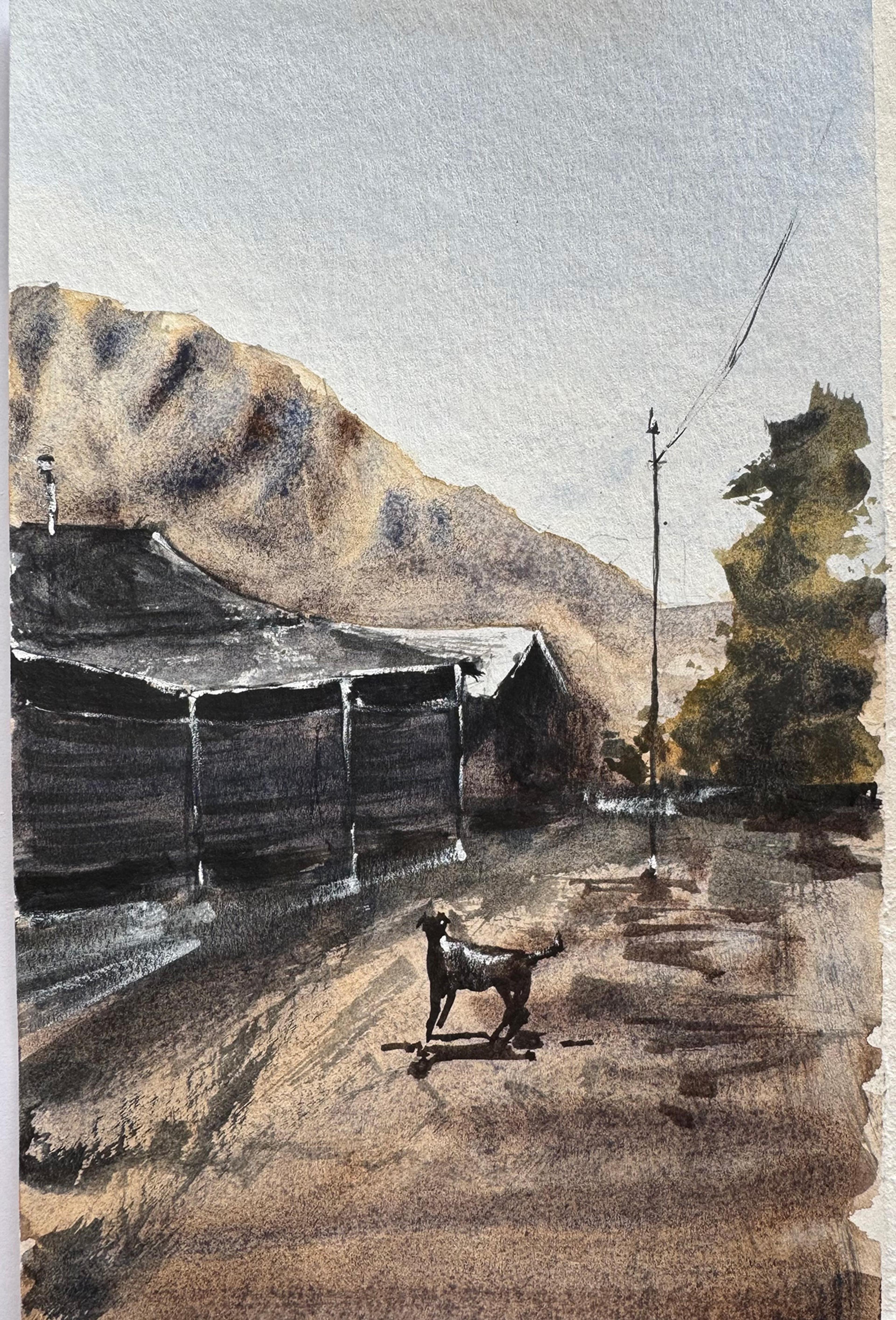
Rosa’s story makes this visible in another way. Her wooden house stood on stilts embedded in the slopes of the Chicauma hill. Years earlier, someone had offered her the plot precisely because no one else wanted it: settling there meant ‘ganársela al cerro’ – winning the ground from the hill. ‘Every day I would come up here,’ she told me, ‘and clear a little ground; then, when my husband got back from work, he would come and do a little more.’ This is how houses are made here: de a poquito, little by little. A neighbour gave her a small shack, three metres by three, to set down and ‘secure the plot’. Each winter, heavy rains could undo what had been built. The domestication of the hill was never definitive.
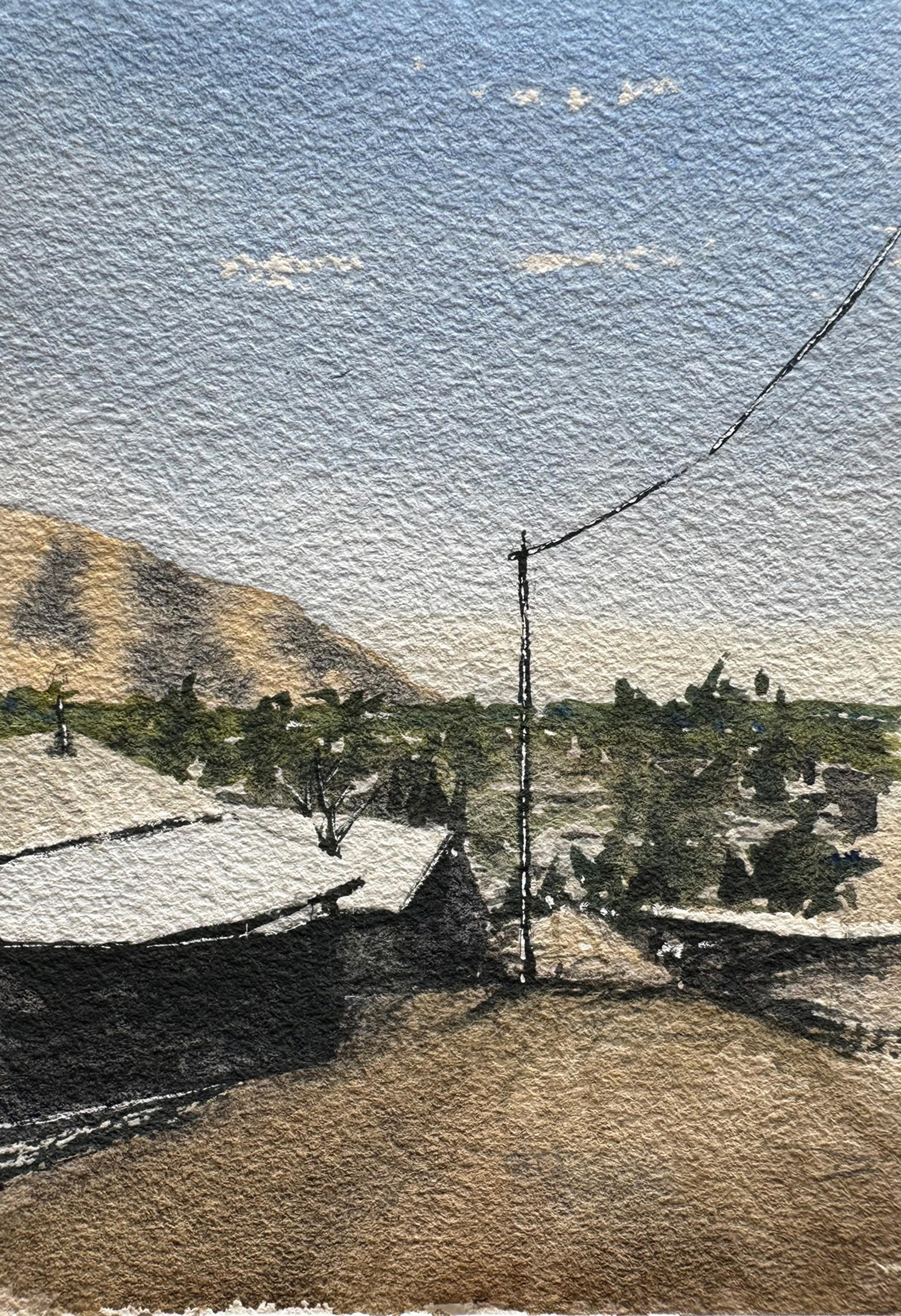
To level the ground, mark boundaries and raise a first shelter is not merely preparatory to building; it is already an act of dwelling. What was once ‘pure earth’ becomes, through repeated acts of care and repair, a lived territory. The plot carries the memory of that founding gesture and, with it, a moral claim to belonging. Here, building still follows dwelling. But, elsewhere, the order has shifted. If Heidegger diagnosed the instrumentalisation of building and dwelling under the technical paradigm, financialisation pushes that logic further still. Over recent decades, housing has been drawn into the circuits of global finance: mortgages are bundled and traded, developments structured as investment vehicles, entire neighbourhoods acquired as investment portfolios. The house becomes an asset. Even its earlier status as a means to dwelling fades. Whether it is inhabited becomes secondary, sometimes irrelevant. This is a further step of abstraction: the house is valued not for the life it hosts, but for the returns it promises.
A Greek temple on a rocky promontory doesn’t merely occupy a site; it gathers a world
The consequences are visible. Across the globe, millions struggle to secure stable housing while large numbers of dwellings stand empty or underused. In several metropolises, high-rise developments marketed to investors remain partially unlit; elsewhere, entire districts rise in anticipation of demand that never fully materialises. The paradox is stark: houses without people, and people without houses. In an age of industrialised real estate, financialised housing and ‘smart homes’ managed by algorithms, it may seem of little use to look instead toward the precarious self-built houses of the urban margins.
Yet in self-building we encounter, perhaps more clearly than elsewhere, a form of practical wisdom – one that embodies and enacts the art of dwelling in the world as humans. This does not imply any idealisation of the poverty that often, though not invariably, accompanies processes of residential self-construction. Yet within conditions of housing precariousness there persists an everyday proximity to finitude – an awareness of fragility and contingency that stands as the counterpart to the human capacity to build a world: to carve out, patiently and imperfectly, a partially domesticated realm in which one may be at home.
Self-construction serves as a reminder that any house, if it is truly to be lived as such, must in some sense be self-built. It must answer to a dwelling that precedes and exceeds it; it must sustain a life and secure, however provisionally, a place in the world. In The Origin of the Work of Art (1950), Heidegger asks what it means for something to be a ‘work’. He turns to the example of a Greek temple on a rocky promontory. The temple doesn’t merely occupy a site; it gathers a world. Birth and death, blessing and disaster, victory and defeat find their measure in its presence. To create a work, he suggests, is to set up a world – to bring earth into appearance and allow things to assume weight and distance within a shared horizon.
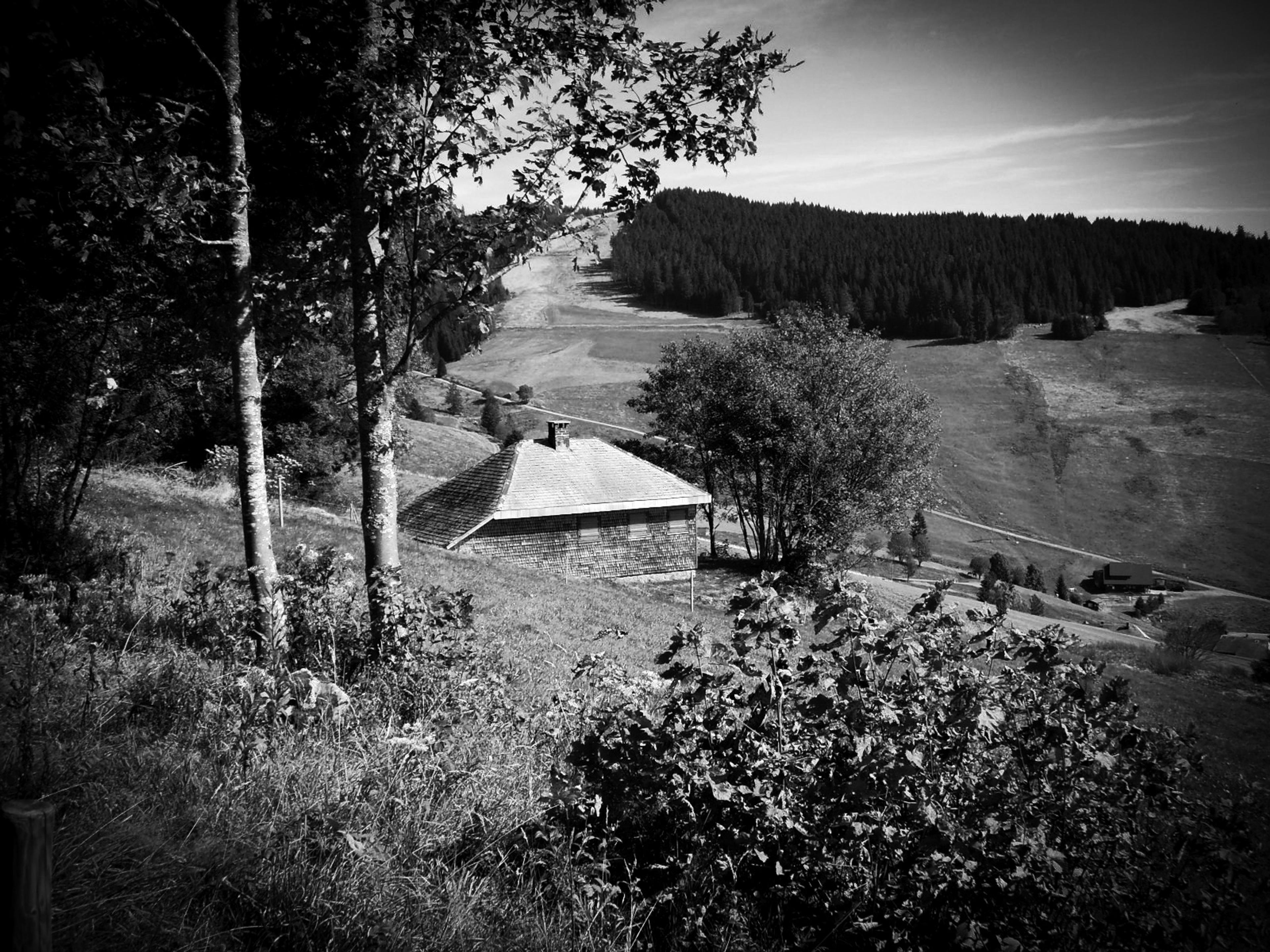
Martin Heidegger’s hut in Todtnauberg, Black Forest, Germany. Wikipedia
The maternal house is one of the places from which a world first opens, what Gaston Bachelard once called the heart of the world for each person. It is there that we learn to distinguish near and far, intimate and foreign, belonging and estrangement. Walls retain memory; unfinished rooms carry expectation. In Heidegger’s evocation of the Black Forest hut, the house is not simply one place among others, but the place from which places are articulated – where earth and sky, mortals and divinities are gathered into a lived order.
We spend our lives trying to make a home of the world. In this, we resemble Homer’s Odysseus: always on the way, exposed to contingency, yet oriented toward a place that might gather our wanderings into something like belonging. Ithaca is not only something left behind, a lost origin; it also lies ahead, as a horizon we must reclaim again and again. At the end of The Odyssey, Penelope, unable to recognise her husband in the aged stranger before her, proposes a test: have our marriage bed moved. It cannot be done, Odysseus replies, because he himself carved it from the trunk of a living olive tree rooted in the ground. The house was built around it. Penelope recognises him at once. What confirms his identity is not simply memory, but a shared act of making – earth worked into form, a dwelling raised around it, a life sedimented in wood and soil. The bed is rooted because it was made there; it binds land appropriated, craft undertaken and a bond forged over time.
This does not mean that only an immovable house can be a home. Many of us inhabit several dwellings over a lifetime; some are rented, others provisional, others left behind. Yet every house that becomes a home requires something akin to that rooted bed: an act of appropriation and recognition through which a portion of the world is made one’s own. Through such a gesture, even the most fragile dwelling can become the place where one learns to dwell.
Supported by a grant from the Open Society Foundations.